Showing posts with label Food preparation. Show all posts

Thursday, February 8, 2018

Simple Sauerkraut


Kraut, or cabbage, is a traditional food in many parts of the world. Sauerkraut is raw, finely sliced or shredded white or red cabbage, which is then lacto-fermented in salty brine, by wild bacteria and yeasts, naturally present on the cabbage leaves. It is therefore ideal to use organic or home-grown cabbage. The final product is full of good bacteria (probiotics), full of fibre (prebiotics), and a good source of vitamins such as C, B and K. Cabbage is also a good source of glutamine, an amino acid which helps to heal and seal the gut lining. Good amount of sulphur compounds support healthy liver detoxification.  The only people, not to be advised to eat too much of aged and fermented foods such as this cabbage, are those with severe histamine intolerance. For the rest of us it is a quick, tried and well-tested way how to re-establish and re-balance our gut microbiom. If you've never had any, starting to eat sauerkraut after longer period of time, or have digestive issues, do start very very slowly. Literally few shreds or a teaspoon of juice are enough per day for the first week.

You will need 


· Small head of healthy cabbage, ideally hard Winter variety

· Natural crystal salt

· One larger glass jar, well washed and sterilised with hot water

· One smaller sterilised jar, which just fits into the large one

· A large bowl


Method 


· Remove several outer leaves and the core.

· Slice very thinly using knife, mandolin or shredder.

· Place the first layer (2-3 handfuls) into the bowl, salt the top generously.

· Repeat until all the cabbage is used.

· Cover with clean napkin and leave to stand for about 30 minutes.

· Mix everything and keep pressing with your fists to release the juices.

· Fill the larger jar, keep pressing the cabbage well, do not leave any air pockets!

· Fill the smaller jar with water and push inside, cover with clean cloth or plastic.

· Leave to stand in cooler, dark place.  Not too cold! About 16C, bottom kitchen cabinet if your house is not overheated.

· Check every odd day to make sure all the cabbage is well-covered with brine.

· Ready to eat from day 5 but ideally after 3 weeks, as you will get different strains of bacteria.

· After 3 weeks keep in the fridge.


Photo recipe


Bubbles will appear after few days...


Feel free to experiment with other veggies!


Thursday, May 4, 2017

How to make better (food) choices


This is not just about food. We have to make tens or hundreds tiny choices daily and only some of them directly relate to our food.

Yet in larger context, the food is the driving force behind the way we live.

What do we listen to when asking internal questions? Is it our logic or knowledge (our mind)? Is it our heart or our emotion (ego?), craving? Is it our experience? Traditions? Or we call our friend? Do we ask questions at all? Or do we just run an automatic pre-recorded “tape” of our life?

My clients are clever and intelligent people and already understand what good food means today. After 3 months of coaching they have even better understanding and motivation. Do they always choose good food? No.

Do I always choose to eat well? No.

Sometimes it’s a choice between ‘eating bad’ or ‘not eating’. The ‘not eating’ part is becoming popular through movement of Paleo and intermittent fasting. The ‘not eating’ part has always been embedded in our culture and is practised to some extent in nations who take fasting periods of year seriously. It takes time to re-learn this ‘not eating’ part… or should I say 'un-learn' the way we eat today? There are several stages to grow through, before fasting becomes easy, natural and won’t cause more harm than good. Please always seek advice from sources you trust.

What makes us to choose wrong food is not completely up to us. Many times we just don’t know what’s inside that meal. If the packaging says "healthy", "natural" or "good for you" it means absolutely nothing! If it has NO packaging, there is a better chance this food is fine. Much like some houses – they have attractive front cover, layer of new paint, or solid entrance gate, but rooms can be uninviting, cold and full of toxic air and mould.

Much too often we end up hungry in places or situations we have no choice. We cannot always carry a suitcase of food with us.  Do not stress if there is no choice.

Frustration can weaken digestion and make it all even worse. Look at the situation as an experiment, if you are really hungry and have no allergies, try again your old fast food. Observe your reactions and feelings of well-being days after.  Do you feel slightly unwell, crampy, forgetful or irritated...? It might be a good sign your body is clean enough to sense what's bad for it! Next time, be better prepared, seek different solutions.

If we do have various choices (as we mostly do), it should be a huge celebration and reason for happiness and feelings of resource abundance. By the way - did you know that feelings of 'resource abundance' is one of the mechanisms to increase gut serotonin, hence the gut motility to prevent constipation?

Embrace the situation when the choice is wide and do the best you can.

Why choose food wrapped up in plastic if we can have it without? Less waste, less estrogenic plasticisers, less wrong kind of bacteria. Why choose drinks in plastic PET bottle if we can filter tap water and add lemon, put it into glass or steel bottle, or even drink directly from the spring. Why choose boxes of industrially made flavoured snacks, if the aisles (or markets) are full of fresh vegetables, fruit, whole nuts, some of it organic and some even local and seasonal. Why to spray our home with toxic “air fresheners” and our bodies with toxic perfumes if we can open window or use few drops of pure essential oils diluted in suitable base, for whatever use we need.

Celebrate your freedom of choice, and uniqueness of your ideal diet and lifestyle.

We all have slightly different needs and we should be proud and free to ask for it. If the people around do not understand yet, we have an opportunity (and calling) to become creative and have our small mission in this world. We can show others a different way of life, be an example, or try to explain, if they care... Or we can learn to ignore the situation or even leave such place if it becomes too detrimental and people are just not ready. This may be very hard decision at first but the good side of any crisis is that it can bring us to those who vibrate on similar frequency. Such move can change our life and make us happier and healthier.

Sunday, April 23, 2017

Hot Green Salad with Gluten Free Grains


Asparagus & Brussels sprouts hot salad.


A savory or salty breakfast - in contrast to a sweet one - can be a powerful strategy in balancing daily blood sugar levels.

In the mornings, the body is more sensitive to sugary and starchy foods than later on in the afternoon or the evenings. Eating sweet or other high-glycemic foods first thing in the morning will make the blood glucose levels imbalanced for the rest of that day. It can bring on the infamous early-afternoon slump (coffee anyone?), headaches, anger, acne break-outs, sugar cravings, stimulant or alcohol cravings, depression and so on… The only way to fix this roller coaster is TO RESET the body OVERNIGHT with good sleep and START AGAIN - with a savory low glycemic load breakfast. Ideally - NO stimulants such as coffee, black or green tea (there are reasons connected to cortisol and related problems of rising blood sugar by other means).

The recipe for my favorite breakfast has developed over time. I tend to have it as my first meal of the day, sometimes as an elevenses or an early lunch.  It can be packed into a food flask and taken out. I like to rotate buckwheat and quinoa, occasionally millet, using various vegetables seasonally available.


INGREDIENTS (1 person):


130g cooked buckwheat groats (or quinoa, millet)

160g green vegetables
favourite choices:
courgette + leek
asparagus + Brussels sprouts
celery+spring onion

You can combine any vegetables but if you have delicate digestion, avoid combining cruciferous (cabbage family such as Brussels, kale) with onion family (leek, spring onion).

Salt to taste

Black pepper to taste

1 clove of crushed garlic


1/3 tsp of cinnamon

20-40g coconut oil / butter / ghee


For better digestion add some:

Lemon juice
Ginger
Horseradish paste
 

Two portions of veggies is a good start for the day ahead...


METHOD:

GRAINS:  can be prepared beforehand and stored in fridge overnight.

1. Rinse buckwheat and leave it soaking for a while. Discard water.

2. Cover up well with hot water from the kettle (2/3 grain, 1/3 water above the grain).

3. Cook for 8-10 minutes half-covered on low flame. Switch off and keep hot by placing thick towel over the lid.

4. After 30 minutes the buckwheat should have soaked up the leftover water, but still stay firm, not mushy or too dry.

VEGGIES

5. Thinly cut up the chosen veggies. Brussels, onion, leeks and grated garlic is best to leave standing for 5-10 minutes to activate their health-promoting substances.

6. Stir-fry on fat for up to 6 minutes, adding water if needed, and the rest of ingredients.

7. Add cooked buckwheat, mix together.


Celery sticks & Brussels sprouts hot salad. Share or leave half for later (elevenses?).


Thursday, January 5, 2017

Wild New Year Sauerkraut Soup


Why wild? 

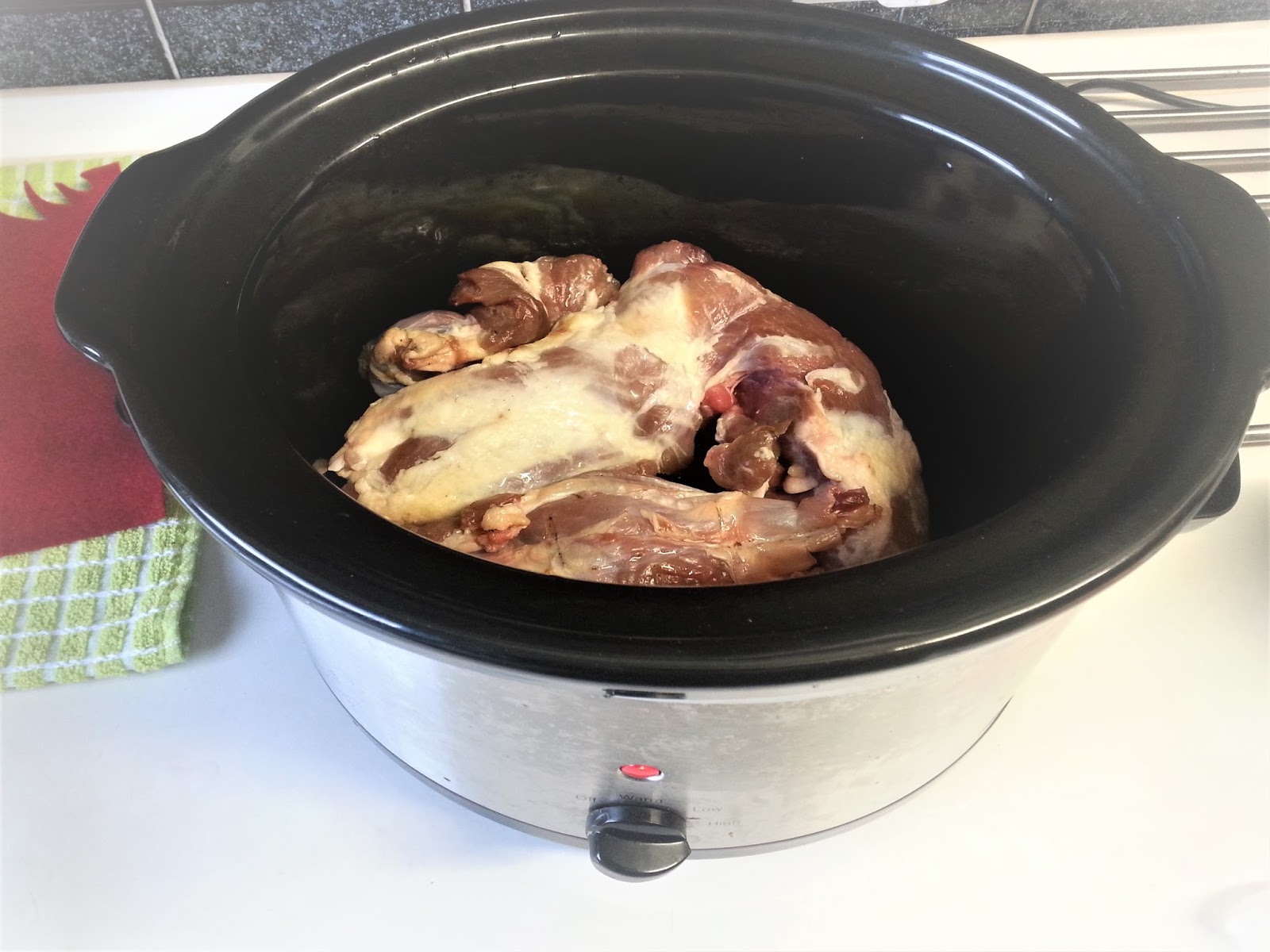
1) Smoked-to-order small piece of Scottish wild boar meat will give our soup typical smoky, salty taste, while is cleaner and more nutritious than commercially produced and plastic-packaged pork or beef. After 3-5 hours of slow cooking in crock pot, this meat is deliciously soft and still full of flavour.


2) Wild-fermented sauerkraut, which was thinly sliced head of cabbage left to wild fermentation in salty brine. This kind of fermentation is called ‘wild’, as there are no additional cultures of bacteria or yeasts added, such as those used in fermentation of yoghurt, kefir or skyr. Wild fermentation means the cabbage has its own bacterial cultures present on leaves, which in suitable conditions (without air) produce lacto-fermentation and change sweet taste of leaves to mildly acidic. Salt brine stops unwanted cultures growing and the final effect, after 3-4 months of bacterial action, is powerful savoury flavour bursting with probiotics and vitamins.


3) Mushrooms of Boletus species are the third wild ingredient. They were gathered by my family in clean and reasonably wild forests of central Europe during the Summer of 2016. It was unusually suitable year for sprouting mushrooms everywhere we looked while outdoors. We dried them specifically for this traditional Winter soup.


Ingredients:

MEAT – ideally smoked piece attached to the bone (joint, ribs etc), clean non-commercial beef or wild quality (boar, duck) or feel free to use a mixture of more types. Roast it first, if using beef or duck, pour fat aside. Fat gets oxidised during long cooking and can also be hard on digestion.

If no meat is available, meat stock (bone broth) made previously will do.

PAPRIKA SAUSAGE – 3x 10cm piece should do for up to 3 litre pot. Try to find traditional smoked, cured or fermented sausage in natural casing of intestine (in the UK can be found as Hungarian, Polish or Chorizo is also similar and suitable type).

SAUERKRAUT – usually 400-500g for up to 3 litre pot.
DRIED MUSHROOMS – wild varieties, 1-3 handfuls
BAY LEAVES 3-5x
CARAWAY SEEDS about 1 tsp
WHOLE PEPPERCORNS about 10
FRESH PEPPERS 2-3 x
TOMATO PUREE (small tin or ½ tube) or PAPRIKA PUREE or KETCHUP or mixture of all...
ONION – medium (or without onion)
FAT to fry onion, can be from roasting meat, or butter, olive oil, lard, even coconut oil (3-4 TBSP)
PAPRIKA SPICE (ideally smoked or Hungarian) – 1 heaped tsp
FLOUR or STARCH – 1 level TBSP (I use gluten free mixture)
GARLIC  4-5 cloves


Method:

You may need to estimate some amounts depending on size of meat you wish to cook, how much soup you want to make (limited by your biggest pot :), how thick you like the soup.


1. Place all meat and bones, except sausages, in a large pot or slow-cooker, cover up with water, add good quality natural salt, 1 tsp to begin with. Remember sauerkraut and smoked meat can both be very salty.

2. While the meat is cooking, add dried wild mushrooms and whole grain of your choice. I prefer millet, quinoa but pearl barley or rice will do. You can add couple of whole potatoes instead of grain. None of these ingredients are necessary but will add extra texture and body.

3. AFTER 1/2 HOUR: Add bay leaves, caraway, whole black pepper.


4. Cut up fresh paprika to 1 cm thin slices, get ready tomato/paprika puree or ketchup. Add everything to the pot.


5. If you think the sauerkraut you have is too salty, gently wash it under water using strainer, but do not over-do it, otherwise you lose too much flavour. Sometimes helps to strain well its juices and no rinsing is needed. Add to the pot.

6. Add sausage(s). Do not cut them up too small beforehand, they loose too much flavour.


7. When meat is soft, get ready to make roux (soup/sauce thickener). Steps 7.-11. are not necessary, some believe cabbage and onions do not do well together.. Its up to you.

8. Chop up onion to small pieces. Leave to stand 5-10 minutes to activate enzymes.

9. Heat enough fat in small pan to take all the onion.


10. When onion start to darken, add 1 leveled TSP of starch or flour, mix it well for about a minute. Then switch the fire off and mix in 1 tsp of paprika spice. Immediately add a cup of cold water. Sometimes I do not use any flour, if soup already looks thick enough after adding too much grains.


11. Add thickening onion mixture to the main pot.

12. Slice garlic, leave to stand 5-10 minutes to activate enzymes and then add to soup.

13. As with all soups, it tastes better on the following day. You can leave it until later to adjust the taste if needed. If too sour, it helps to add a bit of sugar or dried plums.


Monday, June 1, 2015

Phytonutrient-rich 'HASH BROWNS' (sweet potato & beetroot)

Ingredients:

1 small to medium sweet potato
1 medium beetroot
1 egg
coconut oil
good salt

Method:

1) Grate both sweet potato and beetroot.
2) Mix with an egg.
3) Add salt to taste.
Optional: add herbs such as majoram or finely grated garlic.


4) Spoon mixture directly on the pan ready with hot coconut oil and spread it thinly using fork.


5) Fry until the edges start to darken, turn and leave for another 4 minutes, pressing slightly with fork.


Variations: with kale (savoy cabbage) & carrot:


Thursday, March 26, 2015

RESOURCES / gluten, brain health, vaccines

GLUTEN RESOURCES


BASICS ABOUT GLUTEN AND ITS SOURCES - BLOG

2.03 min video
Untreated Celiac Disease Dims the Brain, Can Lead to Underachievement!

0.44 min
Celiac disease and Alzheimer’s

1.13 min
A Large Forehead Can Be a Sign of Celiac Disease 

4.58 min
Dr. Tom O'Bryan - Identifying & Conquering Gluten Sensitivity 

4.31 min
The Difference Between Celiac Disease and Gluten Sensitivity 

1.33 min
Diagnosing the Early Stages of Celiac Disease: Biopsy No Longer a Gold Standard 

1.20 min
Celiac Disease and Related Neurological and Psychiatric Disorders 

0.48 min
Family History of ANY Autoimmune Disease? Consider a Gluten-Related Disorder 

11.51 min
Top 5 Things You Didn't Know about Gluten!

4.40 min
Gluten Free Diet Mistake #1 

1 hour
Alessio Fasano, MD
Spectrum of Gluten-Related Disorders: PEOPLE SHALL NOT LIVE BY BREAD ALONE


E-CONFERENCE  GLUTEN SUMMIT


BRAIN HEALTH


9.43 min
Top 5 Foods for Brain Health!

49 min
Dr. Russell Blaylock: How Nutrition Affects Our Brain and Behaviour

1 hour
Dr. Jeff Senechal - An advanced lecture on brain health

VACCINES


25 min.
Dr. Suzanne Humphries talks about problems with vaccines safety and the integrity of medical system. She is a highly educated medical doctor practising internal medicine and nephrology.


2 hour
The Exploding Autoimmune Epidemic lecture goes through the less-known history of vaccination and connection to autoimmune diseases and other health problems, from Dr. R Tent.

OTHER


Dr. R. Tent Lectures:
Memorable Patient Cases 2
America’s Mineral Crisis

Wednesday, February 5, 2014

GRAIN-FREE nutty-muffins recipe


Ingredients for about 10 muffins:

2-3 large eggs
4 handfuls of nuts {walnuts and pecans are best - other nuts, ideally, need to be soaked & dried & ground first}
1 handful of currants, raisins, sultanas or mixed fruit
1 handful of dates, adjust amount for sweetness
1/2 cup of melted fat {coconut or ordinary butter are ideal}

1 TSP bicarbonate soda
A pinch of salt
Some water/juice/liquid may be required


Optional: add cinnamon, vanilla, organic lemon grind or juice


Photo recipe:


Soaking nuts for several hours helps to get rid of anti-nutrients and activate nutrient release


Dry off soaked nuts

Blend the nuts

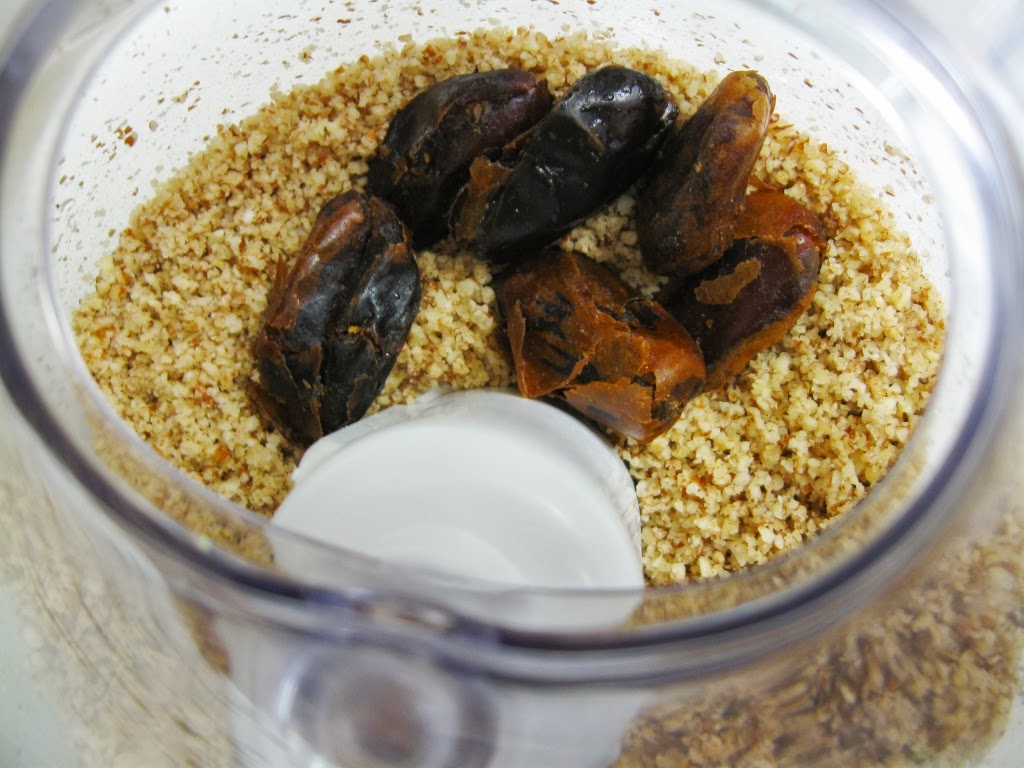
Add dates

Chop dates to required consistency
Mix the rest of ingredients

Add optional spices, seeds, vanilla or lemon grind

Mix together adding little water if too dry.
Fill the muffin cases and place into preheated oven to about 150C or gas mark 4.
Bake for about 15 minutes and check if ready.


LOW-grain or NO-grain cake and muffins

This cake can be made without flour

Ingredients per 1 person / 4 pieces:

1 large egg
2 handfuls of nuts {walnuts and pecans are best - other nuts, ideally, need to be soaked & dried & ground first
1 handful of currants, raisins, sultanas or other mixed, chopped dried fruit
4-5 TBSP melted fat {coconut butter or ordinary butter are ideal}

1/2 TSP bicarbonate soda
A pinch of salt
Some water/juice/liquid may be required if egg is too small or if flour is used

Optional:  3 TBS gluten-free flour
Optional: cinnamon, vanilla, organic lemon grind, nutmeg spice, seeds
For extra sweetness - try Xylitol, stevia, honey or just more dried fruit.


Walnuts/pecans are soft enough to be crushed by hand

Melt the butter and mix with egg to emulsify
 
Mix all the ingredients together


Adding flour is optional

Place into greased baking dish and bake in preheated oven at 150C for about 20 minutes.

You can use the same mixture for making muffins instead.
 
This cake had added poppy seeds


Thursday, March 21, 2013

Are you still using microwaves?

flickr.com

Microwave ovens emit certain electromagnetic frequencies, in a similar way as do mobile phones, TVs, PC screens or satellites. The major difference is – we use these frequencies to heat our food - which is often immediately after heating put inside our bodies.

In this way, we introduce to our body nothing else than a matter, which has been unnaturally re-organised on subatomic scale. Remember, all things around us, including us, are based on constant vibrations of elementary particles. Every time we are exposed to unnatural frequencies, it causes changes in vibrations of matter we are made of and this way it directly affects us.

We cannot ignore the fact that heating by microwave frequencies also has other effect on our food than just making it warmer. The heat does not come from heat source, such as in conventional ovens. It comes from frequencies which make some particles vibrate to the point of releasing heat, as it happens to water molecules.

But what else happens here? What happens, for example, to sensitive molecules, which are going to circulate in our blood and renew our cells or form our DNA? 


STUDY - Effects of microwave radiation on anti-infective factors in human milk


Scientists from the Department of Pediatrics of Stanford University School of Medicine have tested 22 frozen human milk samples for lysozyme activity, total IgA, and specific secretory IgA to E coli.

Lysozymes are enzymes which destroy gram-positive bacteria by digesting their cell walls. They were discovered accidentally by Alexander Fleming in 1922, when nasal drippings (rich in lysozymes) stopped bacterial growth in his Petri dish. Lysozymes are found in tears, mucus, saliva and human milk. 

IgA is an immunoglobulin (antibody) which plays important role in immunity of mucosal membranes, where it protects us from pathogens and exotoxins. Specific sIgA to E.coli is an antibody which destroys this bacterium. 

The samples of milk were heated by microwave for 30 seconds at a different power settings. To each was added 1 mL of diluted E coli suspension. E coli growth was determined after 3.5 hours of incubation at 37C.
  1. Microwaving at high temperatures (72 - 98 C) markedly destroyed anti-infective activity of the milk. At 98C and above, E coli spread 18x faster than in non-microwaved human milk. 
  2. Microwaving at low temperatures (20 -53C) significantly decreased activity of lysozyme and specific IgA to E coli serotype 06. 
  3. Even at 20 - 25C, E coli spread 5x faster than in non-microwaved human milk. 
Conclusion: Microwaving appears to be contraindicated at high temperatures, and questions regarding its safety exist even at low temperatures.

http://pediatrics.aappublications.org/content/89/4/667.abstract
http://lysozyme.co.uk/
http://www.nature.com/mi/journal/v1/n1/full/mi20076a.html


The Swiss clinical study (shortened version)


Dr. Hans Ulrich Hertel, who is now retired, worked as a food scientist for many years with one of the major Swiss food companies.
In 1991, he and a Lausanne University professor published a research paper indicating that food cooked in microwave ovens could pose a greater risk to health than food cooked by conventional means. An article also appeared in issue 19 of the Journal Franz Weber in which it was stated that the consumption of food cooked in microwave ovens had cancerous effects on the blood.

Dr. Hertel was the first scientist to conceive and carry out a quality clinical study on the effects microwaved nutrients have on the blood and physiology of the human body. His small but well controlled study showed the degenerative force produced in microwave ovens and the food processed in them.

The scientific conclusion showed that microwave cooking changed the nutrients in the food; and, changes took place in the participants' blood that could cause deterioration in the human system. Hertel's scientific study was done along with Dr. Bernard H. Blanc of the Swiss Federal Institute of Technology and the University Institute for Biochemistry.

In intervals of two to five days, the volunteers in the study received one of the following food variants on an empty stomach:

1. Raw milk  & The same raw milks cooked in a microwave oven

2. Pasteurized milk & The same milk conventionally cooked

3. Raw vegetables from an organic farm
& The same vegetables cooked conventionally
& The same vegetables frozen and defrosted in a microwave oven
& The same vegetables cooked in the microwave oven

People eating microwaved foods had some significant changes happening in their blood
  •  a decrease in hemoglobin values 
  • decrease in the ratio of HDL (good cholesterol) and LDL (bad cholesterol) 
  • lymphocytes (white blood cells) showed a more distinct short-term decrease following the intake of microwaved food than after the intake of all the other variants 
  • luminescent bacteria exposed to blood serum from people who ate microwaved food had significantly higher luminous power, depending on amount of microwave radiation received 

How microwaves work


Technically produced microwaves are based on the principle of alternating current. Atoms, molecules, and cells hit by this hard electromagnetic radiation are forced to reverse polarity 1-100 billion times a second. There are no atoms, molecules or cells of any organic system able to withstand such a violent, destructive power for any extended period of time, not even in the low energy range of milliwatts. Of all the natural substances - which are polar - the oxygen of water molecules reacts most sensitively. This is how microwave cooking heat is generated - friction from this violence in water molecules. Structures of molecules are torn apart, molecules are forcefully deformed, called structural isomerism, and thus become impaired in quality.

This is contrary to conventional heating of food where heat transfers convectionally from without to within. Cooking by microwaves begins within the cells and molecules where water is present and where the energy is transformed into frictional heat. 

In addition to the violent frictional heat effects, called thermic effects, there are also athermic effects which have hardly ever been taken into account. These athermic effects are not presently measurable, but they can also deform the structures of molecules and have qualitative consequences. For example the weakening of cell membranes by microwaves is used in the field of gene altering technology. 

Because of the force involved, the cells are actually broken, thereby neutralizing the electrical potentials, the very life of the cells, between the outer and inner side of the cell membranes. Impaired cells become easy prey for viruses, fungi and other microorganisms. The natural repair mechanisms are suppressed and cells are forced to adapt to a state of energy emergency - they switch from aerobic to anaerobic respiration. Instead of water and carbon dioxide, the cell poisons hydrogen peroxide and carbon monoxide are produced." 
Microwave oven manufacturers insist that microwaved and irradiated foods do not have any significantly higher radiolytic compounds than do broiled, baked or other conventionally cooked foods. The scientific clinical evidence presented here has shown that this is simply a lie. 
In America, neither universities nor the federal government have conducted any tests concerning the effects on our bodies from eating microwaved foods. Isn't that a bit odd? 

Full Swiss clinical study is available at
http://www.health-science.com/microwave_hazards.html 
http://www.globalhealingcenter.com/health-hazards-to-know-about/microwave-ovens-the-proven-dangers


Changes in chirality of molecules 


If you like good chicken soup or bone broth, do not spoil this great food by defrosting it or heating up by microwave oven. Gelatin part in good meat stock is mostly made of amino acids proline and glycine.

According to a letter published in The Lancet, microwaving converts L-proline (Levo, left) in food to D-proline (Dextro, right), forming an unnatural isomer (twisted molecule). Glycine is symmetric, therefore has no chirality. Conversion of molecules to other isomers in living body is thought to be hazardous to health. Example of such molecule is our DNA, where subunits only exists in one type of chirality. Incorporating amino acid of other chirality (isomer) would not produce functioning DNA.

If wrongly twisted molecules become incorporated into our body, it can lead to structural, functional and immunological changes.

D-proline formed during microwaving food has been found to be 
  • neurotoxic (neural pathways, mental health) 
  • carrying a risk of nephrotoxicity (damaging kidneys) 
  • carrying a risk of hepatotoxicity (damaging liver)
What is worse, there is no reason to think that proline is the only one amino acid molecule subjected to this kind of destruction, and it is likely that other amino acids and molecules in microwaved food would be similarly affected.

Sources
http://www.westonaprice.org/food-features/why-broth-is-beautiful
http://www.ncbi.nlm.nih.gov/pubmed/1968186
http://www.simsoup.info/Origin_Issues_Homochirality.html