Showing posts with label Immunity. Show all posts

Sunday, April 17, 2022

How prebiotic polysaccharides strengthen mucosal immunity


It is known that strenuous exercise and sport reduces innate mucosal immunity, which is the first line of defense against catching viruses and bacteria that play a role in most respiratory diseases.

A small but interesting study of 41 male marathon runners who completed the 42,195 km Barcelona Marathon in 2016 showed that those who did not receive the test supplement (made of polysaccharides from arabinogalactants, aloe vera, gums and algae) had significantly lower salivary sIgA after the race. Lower levels of sIgA indicate decreased mucosal immunity, which is the first and most important defense mechanism to stop pathogens, such as viruses, to enter our body through the mucous membranes of the airways.

Polysaccharides are known to play a role in immune activation and inflammatory processes. Many are better known as prebiotics. Currently, there are three major types of prebiotics that are well documented: inulin, oligosaccharides and arabinogalactans. Other well known polysaccharides are beta-glucans from mushrooms, seaweeds or oats. 


Food for friendly bacteria


These types of polysaccharides are not digested by human enzymes of digestive tract but they have an important role to play as a food source for our microbiota. 

Many studies suggest that the combination of different types of these indigestible polysaccharides provides nutritional benefits by prolonging microbial fermentation in the intestines. This is known to increase uptake of micronutrients such as vitamins and minerals. The presence of prebiotic polysaccharides keeps the intestinal mucous layer healthy, which promotes the process of absorption of nutrients. If the mucous layer becomes unhealthy and inflamed, the absorption of nutrients is compromised (such as happens in coeliac disease).

Training immune cells


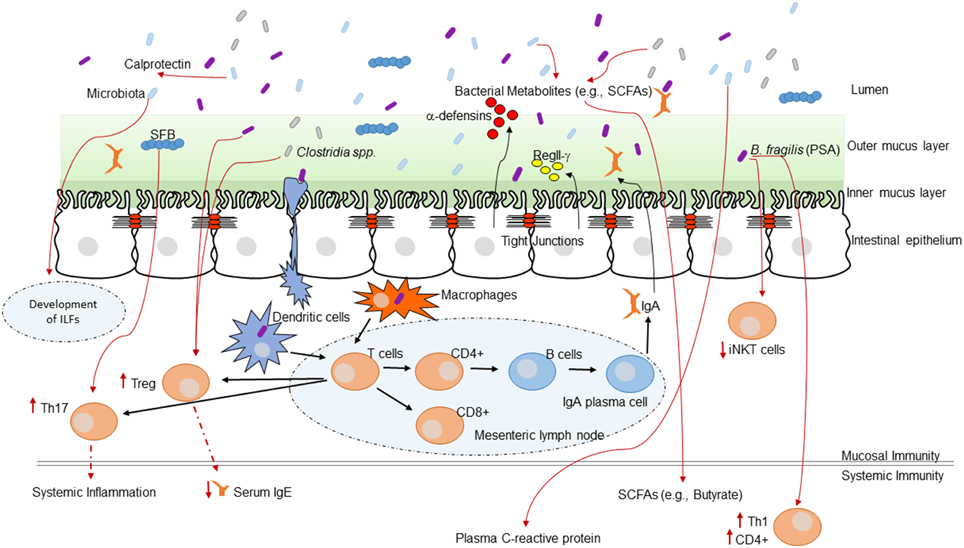
It is easy to understand why prebiotic polysaccharides are useful for the intestinal mucosa. However, it is somehow more difficult to imagine their mechanism of action on other mucous membranes, such as in the respiratory tract. Here comes the second action of polysaccharides. When parts of their molecules cross the intestinal wall, they get scrutinised by the immune cells in the same way as any large and undigested structures would be. Immunity becomes vigilant, but not over-reactive. It becomes activated sufficiently to function properly and ready for a real threat.

The runners took the supplement at dose of 8 g/day for 15 days before the marathon. The supplement was made of arabinolactans, Aloe Vera, rice starch, ghatti gum, gum Tragacanth, Glucosamine HCl and Wakame algae extract. These 15 days were probably enough to ensure more optimal and less-inflammatory state in the intestinal mucosa, which would help better nutrients absorption. However, it is believed that the main effect is happening on the other side of the intestinal layer, called lamina propria, where most of the body's immune cells are trained and developed. This training of immunity would cause a systemic effect (that is, in the rest of the body), thereby promoting a healthier condition of all mucous layers, not only the intestinal ones. 

https://www.frontiersin.org/files/Articles/158648/fmicb-06-01085-HTML/image_m/fmicb-06-01085-g001.jpg


Arabinogalactans are class of long, densely branched polysaccharides belonging to hemicelluloses. In most plants, arabinogalactans occur bonded to protein, either as proteoglycans or as glycoproteins. Many edible and inedible plants are rich sources of arabinogalactans including leeks, radishes, carrots, tomatoes, coconut etc. However the structure in the Western larch tree is slightly different and water-soluble, which makes it more suitable to make concentrated prebiotic supplement.

Aloe Vera, gums and algae extracts (containing fucose, fucoidan, mannose, mannitol...) in the tested supplement would enhance the fermentation in the intestines and therefore help to create stronger and faster immune effect. 

Are supplemental prebiotics polysaccharides suitable for me? 

How much fruit and vegetables do I need to consume to have the same effect? 

What about SIBO??

Find out!


Sources:

https://www.ncbi.nlm.nih.gov/pmc/articles/PMC6434855/

https://www.ncbi.nlm.nih.gov/pmc/articles/PMC8227222/

https://www.ncbi.nlm.nih.gov/pmc/articles/PMC4828828/

https://www.frontiersin.org/articles/10.3389/fmicb.2015.01085/full


Wednesday, January 2, 2019

How to End an Elimination Diet Correctly


 First of all, congratulation to all who were brave and persistent enough to keep the elimination diet based on FoodPrint  intolerance  test (more accurately - IgG allergy test).

Some of you experienced results almost immediately, and it was easier to keep the diet if health improvements were evident. Many needed to combine it with other type of "diets", eliminating both food and non-food personal „kryptonites“. Maybe some had no visible improvement. As a consequence, it is harder to believe that food is connected to a specific health problem. If the latter is the case, please remember that IgG allergy is only one piece of puzzle. It is only one part of complex and highly individual gut-healing Protocol 4R (or 5R).

In all cases, whether improvement has been noticed or not, keeping this test-based elimination diet has had a positive influence on health. Giving a long-needed break to overloaded immunity - by lowering overall inflammation mechanisms - it created more space for healing. Rather than being occupied by daily fights with incoming allergens, the immune system could use the spare energy for regeneration and repair. For many people, this could mean lowering general pain and discomfort.

The recommended time for an elimination diet is 3-4 months but what’s going to happen next - coming off the diet - is no less important.

Many make the crucial mistake of jumping off the diet suddenly and „treating“ themselves to a good portion of „forbidden“ food. Be it a whole slice of (wheat) bread, cake or a pot of ice cream. If this is how you ended the diet, it is possible it was, unfortunately, a waste of time. By the sudden introduction of your „kryptonite“ food, and before making sure the gut is healed and sealed, you’re risking not only a bad reaction to given food but also continuing inflammation and/or leaky gut syndrome.

Please do not waste your time and £££ testing for IgG allergy if you’re not going to do it right. Bad rep to these diets and lab tests often come from people who treat this diet as a simple black&white list. Always try to find practitioners who can take you through the complete functional medicine „Protocol 4R“. This protocol may take several months or even years, depending on your situation and the level of ill health. Be patient. Quick fixes by a straightforward elimination diet may work fine for those reasonably healthy, but symptoms may creep back slowly.

Coming off the diet


1. Do not stop the diet abruptly. Do not eat a whole portion of previously eliminated food. Go slowly.

2. Make sure the gut is healed and sealed, ready to take on the allergen. You can test this directly by a special test for gut permeability or indirectly - by repeating the FoodPrint (or another IgG test), to show the level of improvement.

3. Forget the first three foods on the list, which scored the highest, at least for another couple of months. This is often very difficult for many people as it involves wheat and/or gluten, soy, egg and dairy. Unfortunately, 90% of the cheapest and most accessible foods contain one of these four ingredients. Read the labels.

4. Start with the least reactive foods on the list (orange colour and lowest in red). Introduce them in small amounts, no more than 1-2x per week. Do it as if you were introducing new foods to a baby - no more than a small bite or one leveled teaspoon.

5. Rotate. Do not eat any of the listed food daily. For example, if you had oats (porridge, oatcakes etc.) on Monday and Tuesday, avoid them for 3-4 days.

Considering our genetics (how our ancestors lived), eating simple meals, ideally up to 10 ingredients daily and rotating them over time is what a varied diet should look like. Our ancestors did not have a massive variety over a day or week but changed diets with seasons. Possibly the only exception were days of feasts, only a few times per year.


Introducing the most problematic foods


When your health or symptoms improve enough, after a year or even two, you may wish to re-introduce the most common and potent allergens:  gluten, eggs, dairy, nuts and soy.

Think about why they are the worst offenders and if, in your case, it is worth eating them at all. Double check the IgG test, coeliac panel Cyrex Array3 or true IgE allergy.

Moreover, gluten is a thyrotoxin and tissue mimicker, causing problems even if none of these tests show any positives. Too much soy interferes with thyroid function, a well-known goitrogen, and most of it is GMO.

Gluten and grains - make a homemade bone broth soup into which you add some grains as pasta. Do not eat pasta at first when having this soup. Small amounts of gluten protein will be released into the liquid. Bone broth helps to heal your intestinal lining. The effect of re-introduced gluten will hopefully be dampened down. Another way is to start buying porridge oats that are not gluten-free certified and, are usually contaminated with few grains of wheat or barley. Choose organic if you can.

Dairy – a good way to start is with butter (goat or cow) and fermented dairy products. Try organic homemade sour whey, quark (soft cheese) or a teaspoon of coconut-dairy culture mixed yogurt. Hard cheeses only as few strands of grated cheese at first, no more! Probably the best way of introducing dairy protein is in the form of colostrum supplement, which can seal your gut very quickly. It's the original function of colostrum to do just that in newborns!

Egg – split the white and yolk, depending on your needs. If you tested for both, introduce both but in tiny amounts. Start introducing an egg that is not highly denatured (such as happens after baking). Try soft-boiled or a scrambled egg made for another family member. Have only 1-2 teaspoons at first and only once per week.

How to prevent new food sensitivities


Eat a varied diet (see above what I mean by it) by rotating all foods weekly or seasonally, specifically those previously tested positive.

Do not eat the same foods and food ingredients every day, all day.

The biggest concern is the presence of highly reactive and pro-inflammatory gluten, wheat & other grains, denatured powdered egg, dairy and soy. Most of these can be hidden, including „health foods“. This includes vegan or vegetarian meat imitations, some made of pure gluten, some of pure soy, or Fusarium mold. Frightful! Cheap processed meat can also be filled with wheat and soy flour, as well as ready-made meals, cakes, bars, non-dairy replacements and sauces. Another bad example is snacking on a whole bag of nuts at once.
 

Troubleshooting


Remember that your immune-based sensitivity to food (by forming IgG antibodies) is only one type of body reaction to food.

If you test IgG positive, then correctly proceed through the elimination diet, and if nothing improves, you have to dig deeper. There can be several other reasons:

1.True allergy to foods - shows as an increase of IgE (not IgG) antibodies.

2.Environmental reactions. Both IgE and IgG can develop towards chemicals hidden in food, every-day cosmetics, cleaning products or even environmental dust (biotoxins - pollen, mites, molds and their mycotoxins – this is sometimes called the sick building syndrome). 

3.Enzymatic insufficiency-based intolerance to foods (such as lactose or histamine). This deficit of enzymes can be natural, such as losing tolerance to milk sugar lactose in adulthood. Another example is dysbiosis-induced fructose malabsorption (or wider FODMAP malabsorption).

4.Reactions to lectins such as WGA, solanin, salicylates or other plant-protecting phytochemicals.

5.Cross-reactions. Both IgE and IgG-tested foods/items can have several other cross-reacting pals. For example, if you don’t eat buckwheat but tested positive for all other grains, you are likely to react to buckwheat, too (even if test does not show it). Cross-reactions must be taken more seriously when dealing with autoimmunity, and this stricter version of an elimination diet is called AIP = autoimmune protocol.


Thursday, March 10, 2016

Nutriwellness MagicMix Drink


FLEXIBLE RECIPE


Spice base (all together or to chose from):

CORIANDER ground seed - 1 tsp
TURMERIC - 1/2-1 tsp (can stain the teeth - brush them after each drink!)
CINNAMON – 1/3 tsp
GROUND CLOVES - 1/4 tsp
BLACK PEPPER spice – pinch or two (to enhance absorption of others, especially turmeric)

If you need to warm up and can stand the heat, you can add the following two. I prefer ginger fresh and with lemon. Chili tastes better in a cacao (cocoa) drink..

GINGER POWDER – 1/3 tsp
CHILI - pinch


‘Roasted’ base (chose 0-3 to make 1-2 tsp altogether):

CHICORY – 1 leveled tsp
ACORN COFFEE (ŽALUĎOVKA) – 1 leveled tsp
DANDELION COFFEE
CAROB POWDER
ORDINARY ORGANIC COFFEE (espresso)
CACAO (COCOA POWDER) 


MUSHROOMS and other TONIC HERBS (chose 2-5):

REISHI – 1/3 tsp extract powder (or separately made herbal tea)
CORDYCEPS – 1/3 tsp extract powder (or 1 tsp ordinary powder)
FO-TI root (He Shou Wu) powder - 1/2 tsp
REHMANNIA - 1/3 tsp powder

ASTRAGALUS - 1 leveled tsp powder

SCHISANDRA powdered berry - 1/3 tsp or:
Schisandra tincture 5-10 drops

CHAGA powdered mycelium -1/2 tsp
CHAGA strong black bitter extract – 1/6 tsp (this product can last a whole year..)

SHITAKE extract - 1/4-1/2 tsp
SHITAKE or MAITAKE powder - 1 leveled tsp

ATRACTYLODES POWDER 1 tsp
WHITE ATRACTYLODES extract - 1/2 tsp

CORIOLUS – 1/2 tsp powder or tea made from the whole herb


FATS to make drink creamy:

COCONUT BUTTER / ORDINARY BUTTER - 1 heaped tsp
COCOA BUTTER (BUTTONS) – 2-4 pieces
MILK - organic full-fat (if you tolerate dairy) or nut milks (almonds, hazelnut, pumpkin, coconut...)


EXAMPLE and method:

1) Boil the water
2) To 300-400ml cup add following

CORIANDER ground seed - 1/2-1 tsp
TURMERIC - 1/2-1 tsp
CINNAMON – 1/3 tsp
BLACK PEPPER – pinch
CHICORY coffee – 1/2-1 tsp
REISHI – 1/2 tsp extract
FO-TI ROOT – 1/2-1 tsp
SCHISANDRA - 1/3 tsp powdered berries

3) Pour the boiling water, stir well.
4) Add fats or milks, for extra creaminess mix with capuchino mini-blender.
5) Stir before drinking for maximum benefits as this lifts settled powders.


WHERE TO BUY

Mushrooms and other herbs can have 3 main forms:

1) EXTRACT POWDER - this is an equivalent to instant drinks. There is a very little residue when poured over with hot water and powder has high concentration; therefore can be more expensive per gram, compared to ordinary powdered form - you only need very little of it to make strong drink.

2) POWDER - FINELY GROUND HERB - this is where most ordinary spices belong. Drink made from powders will have some residue on the bottom of the cup and usually need to be left in boiled water for few minutes to extract the goodness of herbs. Some need fat to be dissolved better.

3) WHOLE HERB - need to be made into decoction by boiling up, often for up to an hour, depending on type of herb.

I started to make decoctions from the whole herbs but this method was very time-consuming. When first extracts and powders appeared it was very welcomed but also confusing. It was hard to tell, what was a good quality one and what these powders should cost. I went through over 10 different brands; there are some very good quality powdered extracts available now, but they can be very expensive. If you're a beginner and want to try a variety of herbs, I recommend to start with cheaper and milder powders, such as those from Detox Trading. 

DetoxTrading sells very affordable but good quality and good tasting powders of mushrooms, herbs and berries. I specifically like their Schisandra berry powder, which has bright red colour, unlike other powders or extracts I tried before. I also like their Cordyceps mushroom because it tastes like chocolate! ;) I also learned, this Cordyceps is 100% powder, ideal for people who may be highly allergic to grains and worry about rice or corn dextrose, usually added to extracts as bulking agent.

I cannot tell, if medicinal value of these mushroom powders is as high as that of concentrated extracts, but I do like their taste and as I use these drinks as replacement for ordinary coffee or chocolate, which I'm too sensitive too, I appreciate their affordable price.

If you seek mushrooms for medical reasons, concentrated extracts or combinations would be more suitable, and such I found to be of good quality here, HEREhere or here.


Coriolus can be found in forests across the UK or Europe..


Thursday, March 26, 2015

RESOURCES / gluten, brain health, vaccines

GLUTEN RESOURCES


BASICS ABOUT GLUTEN AND ITS SOURCES - BLOG

2.03 min video
Untreated Celiac Disease Dims the Brain, Can Lead to Underachievement!

0.44 min
Celiac disease and Alzheimer’s

1.13 min
A Large Forehead Can Be a Sign of Celiac Disease 

4.58 min
Dr. Tom O'Bryan - Identifying & Conquering Gluten Sensitivity 

4.31 min
The Difference Between Celiac Disease and Gluten Sensitivity 

1.33 min
Diagnosing the Early Stages of Celiac Disease: Biopsy No Longer a Gold Standard 

1.20 min
Celiac Disease and Related Neurological and Psychiatric Disorders 

0.48 min
Family History of ANY Autoimmune Disease? Consider a Gluten-Related Disorder 

11.51 min
Top 5 Things You Didn't Know about Gluten!

4.40 min
Gluten Free Diet Mistake #1 

1 hour
Alessio Fasano, MD
Spectrum of Gluten-Related Disorders: PEOPLE SHALL NOT LIVE BY BREAD ALONE


E-CONFERENCE  GLUTEN SUMMIT


BRAIN HEALTH


9.43 min
Top 5 Foods for Brain Health!

49 min
Dr. Russell Blaylock: How Nutrition Affects Our Brain and Behaviour

1 hour
Dr. Jeff Senechal - An advanced lecture on brain health

VACCINES


25 min.
Dr. Suzanne Humphries talks about problems with vaccines safety and the integrity of medical system. She is a highly educated medical doctor practising internal medicine and nephrology.


2 hour
The Exploding Autoimmune Epidemic lecture goes through the less-known history of vaccination and connection to autoimmune diseases and other health problems, from Dr. R Tent.

OTHER


Dr. R. Tent Lectures:
Memorable Patient Cases 2
America’s Mineral Crisis